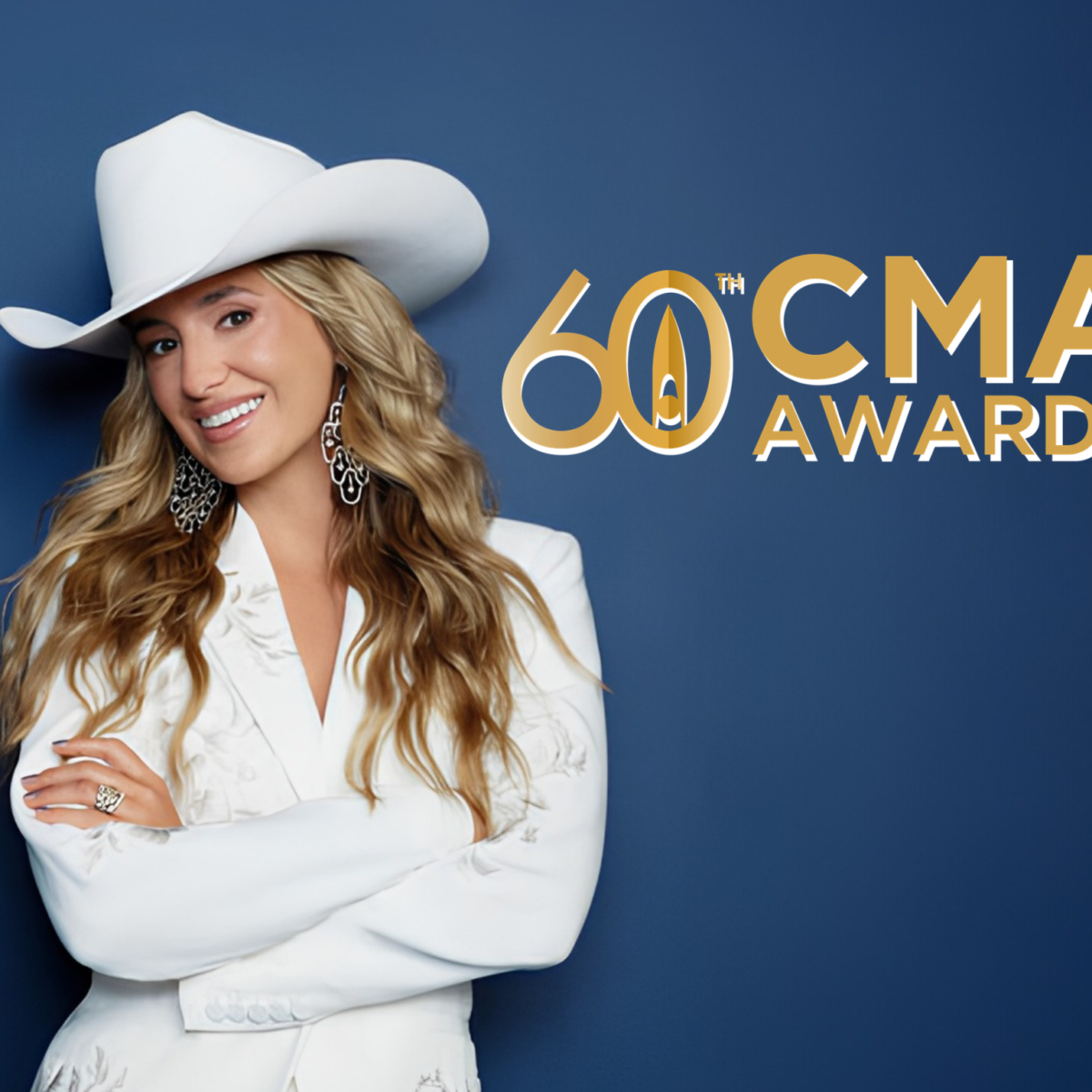
Every so often an awards show lands on a night that feels like a hinge, and the 60th Annual CMA Awards was one of those.
The ceremony opened with a farewell to Dolly Parton, who died in August at the age of 80. It closed with Ella Langley, the Alabama singer behind the year’s defining hit, “Choosin’ Texas,” looking out at a room that had just handed her more trophies in one evening than any artist in the history of the awards.
And somewhere in the middle, Taylor Swift walked through a backstage hallway singing, stepped onto a country stage for the first time in 13 years, and set off the loudest roar of the night.
Lainey Wilson hosted for the third consecutive year, and she kept the tone where it works best for this show: affectionate, a little silly, and deeply aware of the genre’s history. The winners were chosen by more than 7,000 members of the Country Music Association, a voting body of musicians, songwriters, executives and other industry professionals, and the results were less a series of surprises than a confirmation of what the past twelve months had been.
Entering the night with a field-leading nine nominations, Langley did something that sounds like an exaggeration until you read the list. She won Entertainer of the Year, Album of the Year for Dandelion, Single of the Year, Song of the Year and Music Video of the Year, all three of those for “Choosin’ Texas,” and Female Vocalist of the Year. That is six trophies, the most any artist has ever won at a single CMA Awards ceremony.
Her acceptance speeches were a study in a person trying to keep up with her own luck. After the Single of the Year win, she said the song was the gift that keeps on giving and talked about how it began with a group of friends simply sitting in a room one afternoon and doing their best work. By the time she took the final award of the evening, Entertainer of the Year, she had gone fully into stunned comedy, joking that at this point she was sick of herself. She added that she had watched these awards since she was a kid, that Song of the Year and Entertainer of the Year were the two she wanted most, and that she could quit tomorrow and still have the best career she could have asked for.
That last line landed because it was true to the evening’s mood. Wilson, in a funny and generous gesture, came out with a bedazzled broom to celebrate her friend’s “sweep.” It was the kind of visual gag that only works when the person on the receiving end is truly beloved by the room, and Langley clearly is.
Here is how the principal awards broke down, along with who she or he was up against.
Entertainer of the Year: Ella Langley
The nominees were Luke Combs, Cody Johnson, Ella Langley, Chris Stapleton and Lainey Wilson. It is the genre’s top prize and, historically, one that rewards sustained touring and cultural gravity as much as a hot streak. That Langley won it in a field that included two previous winners of the category’s era, a reigning host, and Stapleton, arguably the most respected voice in Nashville, says a great deal about how complete her year was. The fact that it came last in the show, after five other trophies, gave the evening a clear shape: build, build, and then the capstone.
Album of the Year: Dandelion, Ella Langley
The album category was a strong one. Besides Langley’s Dandelion, the nominees were Zach Top’s Ain’t in It for My Health, Kacey Musgraves’ Middle of Nowhere, Parker McCollum’s self-titled record, and Luke Combs’ The Way I Am. The award goes to the artist, producers and mix engineer, and for Dandelion the credited producers are Devin Dawson, Langley, Miranda Lambert and Ben West, with Dave Clauss as mix engineer. Note Lambert’s name; it will come up again.
Single of the Year: “Choosin’ Texas,” Ella Langley
This was the category in which Swift was nominated, and it was arguably the strongest field of the night: Langley’s “Choosin’ Texas” and “Be Her,” Swift’s “I Knew It, I Knew You,” Lainey Wilson’s “Somewhere Over Laredo,” and Cody Johnson’s “The Fall.” Having two songs from the same artist in the category speaks to Langley’s year. The producers credited on the winning single are Lambert, Langley and West.
Song of the Year: “Choosin’ Texas”
Song of the Year honors the writers, which in this case means Luke Dick, Ella Langley, Miranda Lambert and Joybeth Taylor. The competition included Langley’s own “Be Her,” Megan Moroney’s “Beautiful Things,” Musgraves’ “Dry Spell” (written with Luke Laird, Shane McAnally and Josh Osborne), and Stephen Wilson Jr.’s “Gary.” Winning this one mattered to Langley in particular; she said it was one of the two awards she cared about most.
Female Vocalist of the Year: Ella Langley
Langley beat Miranda Lambert, Megan Moroney, Kacey Musgraves and Lainey Wilson. It is a remarkable group, and the category could have gone any of several ways in a different year.
Male Vocalist of the Year: Chris Stapleton
Stapleton took his ninth Male Vocalist trophy, extending his own record in the category. The nominees were Luke Combs, Cody Johnson, Zach Top, Stephen Wilson Jr. and Stapleton. Nine wins in one category is a statistic that would be unthinkable in most genres; in country, it reads as a vote of confidence in a singular voice.
New Artist of the Year: Stephen Wilson Jr.
This was one of the evening’s genuine surprises. Wilson beat Avery Anna, Carter Faith, Emily Ann Roberts and Tucker Wetmore, and it was his first CMA Award of any kind. His song “Gary” was also nominated for Song of the Year and Music Video of the Year, which gives some sense of how much room his work has taken up in the conversation.
Vocal Group of the Year: The Red Clay Strays
The Alabama band took the category for the second year in a row, beating Lady A, Little Big Town, Midland and Old Dominion. They also performed their song “Revival” during the broadcast.
Vocal Duo of the Year: Brooks & Dunn
Kix Brooks and Ronnie Dunn won over Brothers Osborne, Dan + Shay, Muscadine Bloodline and Thelma & James. The win was the 17th for the pair in the category and the 21st overall, both all-time CMA records. More on their night below.
Musical Event of the Year: “McArthur”
Hardy, Tim McGraw, Eric Church and Morgan Wallen won for “McArthur.”. The other nominees included Lambert’s “A Song to Sing” with Chris Stapleton and Musgraves’ “Horses and Divorces” with Lambert.
Music Video of the Year: “Choosin’ Texas”
Langley, along with directors Caylee Robillard and Wales Toney, took the video trophy over Musgraves’ “Dry Spell,” Wilson Jr.’s “Gary,” Johnson’s “The Fall” and Stapleton’s “White Horse.”
Other notable parts of the show…..
Willie Nelson Lifetime Achievement Award: Brooks & Dunn
A Quiet, Powerful Opening: The Dolly Parton Tribute
If there was a single moment that set the emotional register for the evening, it was the opening. Before any trophy was handed out, Wilson and Vince Gill took the stage for a tribute to Dolly Parton, who died on August 25. Wilson began with a brief speech in which she said, “Dolly gave us hope, Dolly gave us joy. Dolly gave us her heart,” and spoke about how Parton’s compassion was rooted in her spiritual upbringing.
The two then sang “I Will Always Love You,” with piano and strings and not much else. A tribute to someone this large can easily collapse under its own production, and this one did the opposite. It let two excellent voices find harmony and trusted the song.
The night also remembered John Anderson, the singer of “Swingin’,” who died suddenly at 71 on October 21. Zach Top and Dierks Bentley paid tribute with a duet of that rowdy classic.
Lainey Wilson’s Third Turn as Host:
Hosting an awards show is a thankless job: you have to keep the evening moving, make the winners feel celebrated, and avoid anything that will be repeated for the wrong reasons the next morning. Wilson has made it look easy, and in her third year she seemed more relaxed than ever.
Her opening monologue was built around a sketch with Brad Paisley, a former host and one of the great comic presences in the genre. Together they remixed country classics for the digital age. “Coal Miner’s Daughter” became “Data Miner’s Daughter.” “He Stopped Loving Her Today” became “He Stopped Liking Her Posts Today.” And “You Were Always on My Mind” became “You Were Always on Your Phone.” Those are the kind of jokes that work because they are affectionate toward the songs they dismantle, and because the audience in that building knows every word of every original.
The monologue also took gentle shots at Swift, over her Madison Square Garden wedding, and at Sammy Kershaw, over a red carpet controversy that had been simmering all week. Neither joke felt mean-spirited, and Swift, by all accounts, was a good sport.
Taylor Swift Comes Home:
It is hard to overstate how much anticipation attached to Swift’s appearance. She had not performed on the CMA stage in 13 years, and she had not attended the ceremony in 10, since 2016, when she presented Garth Brooks with the Entertainer of the Year award. She is a two-time CMA Entertainer of the Year herself and won the Horizon Award, the show’s old new-artist prize, in 2007, a year after her debut album. This year she returned with a reason: “I Knew It, I Knew You,” the song she wrote and recorded was nominated for Single of the Year. It was her 26th career CMA nomination and her first since 2022, when she was recognized in the Video of the Year category for her collaboration with Chris Stapleton, “I Bet You Think About Me.”
The song is also notable as Swift’s first new release in over a decade to be marketed as country music, and in the weeks before the ceremony it earned two Grammy nominations, for Song of the Year and for Best Song Written for Visual Media. She was also inducted into the Nashville Songwriters Hall of Fame last month, so the CMA appearance came amid a larger public embrace of her Nashville roots. The song is written from the point of view of Jessie, the yodeling cowgirl in the Toy Story films, and Swift has spoken about connecting with the character.
In the performance about midway through the broadcast, was staged as a small movie. It began backstage, with Swift singing the opening lines of “I Knew It, I Knew You” as she wandered the corridors of the arena and bumped into a who’s-who of country music. Brad Paisley was seen dusting off her numerous trophies. Brooks & Dunn were shown gambling. Host Lainey Wilson handed her a pair of sunglasses. Eric Church, Little Big Town and Sugarland were all there, and the longest-serving member of the Grand Ole Opry, Bill Anderson, escorted her to the stage. It was a loving in-joke about how deeply connected she is to this community, and it also solved a problem that has dogged other comeback performances, which is how to make a return feel like it belongs to the room as much as to the star.
She lost the Single of the Year race to Langley, but nobody seemed to treat the loss as the point. Swift went home with no trophy, and she had one of the night’s best moments anyway.
Brooks & Dunn: A Lifetime of Honky-Tonk
The Willie Nelson Lifetime Achievement Award is the CMA’s way of saying that an artist is part of the permanent architecture of the genre, and Brooks & Dunn have been that for more than three decades. The tribute was built as a cross-section of the people they influenced.
The hard-rock band Halestorm opened with a screaming take on “Boot Scootin’ Boogie.” Marcus King followed with a bluesy “Rock My World (Little Country Girl).” Brothers Osborne delivered a steel-toed “Hard Workin’ Man,” and Hardy went full head-banger on “Hillbilly Deluxe.” Luke Bryan and Brad Paisley closed the medley with “Play Something Country,” while Kix Brooks and Ronnie Dunn watched from their seats.
After Swift’s introduction, both men took the stage to accept the award. They spoke about the heroes who shaped them, including Willie Nelson, Johnny Cash and Dolly Parton, and Brooks talked about the humility of being a fan. It was warm, short and unfussy. They also took the Vocal Duo of the Year trophy earlier in the night, which extended their record for most wins in that category to 17 and their overall tally to 21, the most in CMA history.
Beyond the three major set pieces already described, the night was loaded with performances, and several stood out.
Ella Langley: “Loving Life Again”
Langley performed this song on a circular stage surrounded by lush plants and ringed in hazy light. Among evergreen pines and tall grasses, the dreamy anthem about finding happiness was an encouraging highlight.
Ella Langley and Miranda Lambert: “Snakeskin Boots”
The two most-honored artists of the night teamed up for the television premiere of “Snakeskin Boots,” a song from Lambert’s album Crisco. They wore snakeskin dresses and danced through a Western ghost town set in a disco-country number that felt like two friends letting loose. Lambert, who is already the CMA’s most-winning and most-nominated female artist, picked up three trophies on the night, which brought her career total to 17. Her wins came through her songwriting credit on “Choosin’ Texas” and her production credits on that song and on Dandelion, which tells you how thoroughly she shaped Langley’s breakthrough.
Kacey Musgraves and Miranda Lambert: “Horses and Divorces”
Near the top of the show, Musgraves and Lambert performed “Horses and Divorces,” a cheeky tribute to female friendship. The set was a salon decked out with photographs of country women, including Reba McEntire and Lorrie Morgan. It was a performance with a point, bringing together two powerhouses who had not always seemed to connect in the past, and the setting turned the song into a small statement about the women who built the genre.
Chris Stapleton: “Here” and “I’m a Song”
Stapleton had a double duty. First, he teamed up with Mumford & Sons for the first live performance of their collaboration “Here,” a mix of gritty acoustic guitar and brass horns built around a confessional lyric about brokenness. Later he joined the night’s new artist winner, Stephen Wilson Jr., for the duet “I’m a Song,” a mellow, brooding meditation on what songs mean to people. It is rare to see two such distinctive voices share a mic, and it made a good argument for why both men won their trophies.
Other performers on the bill included Cody Johnson, Tim McGraw, Luke Combs and Tucker Wetmore, along with Lainey Wilson and Stephen Wilson Jr. in their own spots. Presenters included Jessica Chastain, as well as Kimberly Williams-Paisley and Darius Rucker, who handed out the New Artist award.
As awards shows go, the 60th CMAs were remarkably well made. The pacing was good, the tone was warm, and the tributes landed because they were restrained. The Dolly Parton opening could have been an overproduced spectacle and instead was two voices and a piano. The Brooks & Dunn salute could have been a standard medley and instead made an argument about the breadth of their influence. The hosting was assured and funny without being cruel.
If I had to find fault, I would point to the sheer lopsidedness of the awards themselves. A sweep this complete is thrilling in the moment and a little deflating over four hours, because the suspense drains out of the later categories. Langley’s talent and her year justify every trophy, but a ceremony that hands one artist six of its thirteen competitive awards leaves less room for the other nominees to have their moments. Nominees like Musgraves, Combs, Johnson and Moroney could be forgiven for feeling a little invisible, although the generosity of the performance slots helped balance things out.
There is also the question of what the night means going forward. “Choosin’ Texas” will be a hard act to follow, for Langley and for the genre, and the quiet challenge in front of her now is to turn a record-setting hit into a long career. The ease with which she accepted these awards suggests she knows that. Her closing remark that she could quit tomorrow and still have the best career imaginable reads, in context, as gratitude, not retirement. I would expect the opposite.
And then there is Swift. Her appearance was never going to decide a single award, and it did not. But it did something that the numbers cannot measure. It reminded a room full of people who watched a teenager arrive in Nashville two decades ago that she had never really left the neighborhood, even if the neighborhood had stopped expecting her at the door. The backstage walk-through, the cameos, the sudden shift into “Our Song” with Keith Urban at her side: it was a thank-you note to a community, written in the language that community speaks best. She lost Single of the Year to a record-setting rival, handed a lifetime achievement award to two of the genre’s greats, and sang her way back into the family photo.
That is a pretty good night’s work, and it is a fitting summary of the whole evening. The 60th CMA Awards belonged to Ella Langley, but it was a night in which everyone in the room got to feel, for a few hours, like they belonged to something bigger.