Adam Calvert’s “Christmas in the 90s”: A Holiday Song Set on a VHS Tape
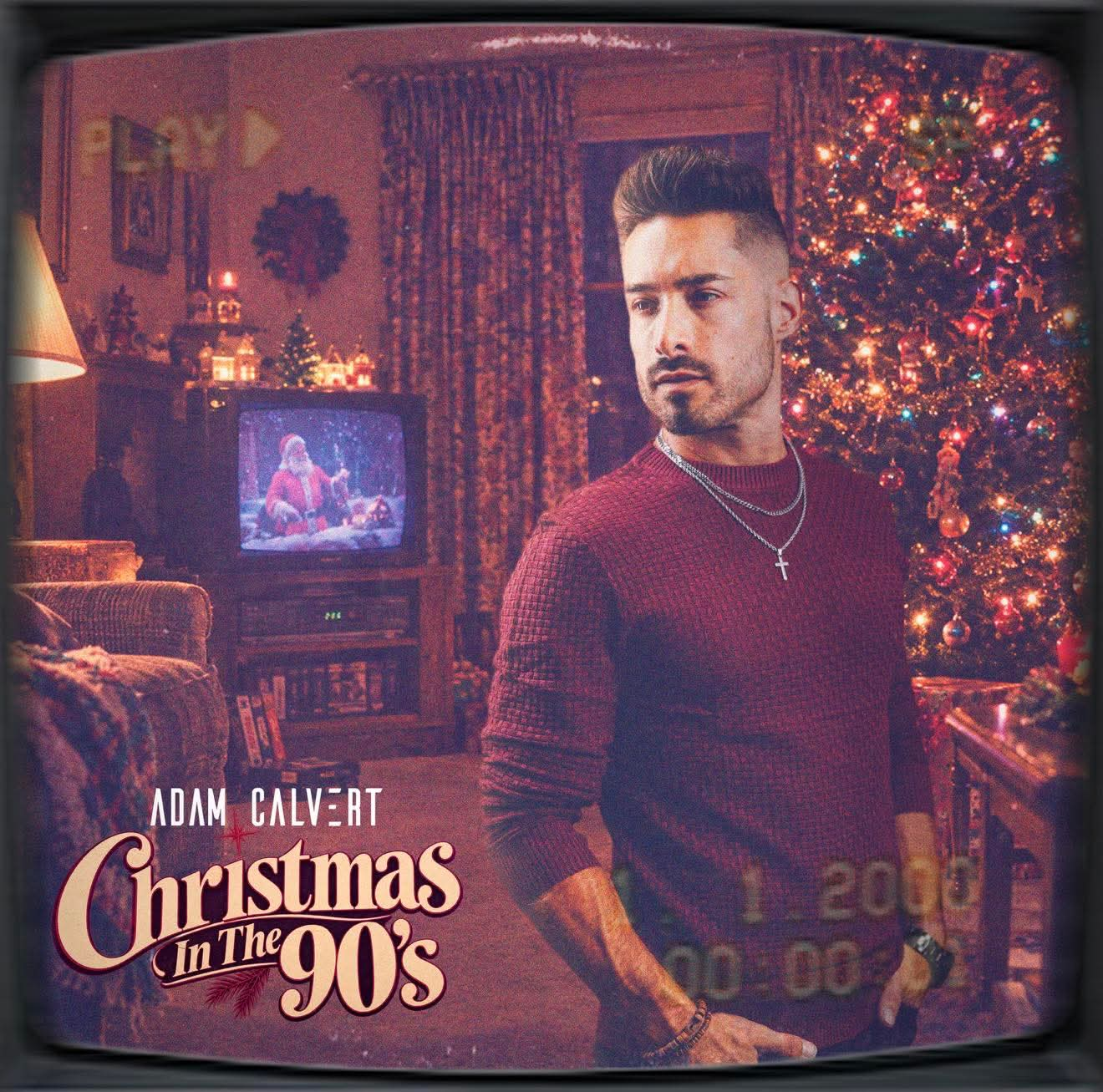
Christmas songs usually look backward, but this one looks backward to a particular decade. The cover art for Adam Calvert’s “Christmas in the 90s” is dressed like an old home video. A “PLAY” tag sits in the corner, and a timestamp reads “1. 2000” over “00:00.” A multicolor-lit tree glows on the right. A lamp, patterned drapes, and a tube TV showing a Santa picture fill the room. Calvert stands in the middle in a maroon sweater and layered necklaces, looking off to the side as if someone just called him from the kitchen. The title is in a retro cream script at the lower left, with “90’s” carrying an apostrophe on the cover.
It’s an inviting image, and the song doesn’t let it down. The track runs about 3:24 and it”s a comfortable walking pace, neither a slow ballad nor a sleigh-bell sprint. Calvert is a Nashville-based independent country artist who grew up in Cambridge, Ohio. His recent single “Horses in Ohio” also reaches back toward home, so a nostalgia piece isn’t a stretch for him.
The song is built on one wish. Calvert pictures himself drifting into a snow globe and landing in a living room from a “throwback TV show.” The snow globe works well as an image because it’s a sealed, shaken, perfectly preserved world. That is how memory treats childhood Christmases, and the writing seems to know it.
The first verse is a list of sensory details. There are lights on the tree and presents stacked underneath. Cookies cool on the stove. A Yule log burns on the television, and hot chocolate warms him against the cold. Nothing here is surprising, which is the point. Anyone who grew up in that era can fill in the rest, and the writing trusts listeners to do so.
The Yule log on the TV is the most telling detail. The fireplace was a channel, not a fireplace, and that tells you what kind of Christmas he’s describing: warm, a little artificial, and completely sincere.
The chorus is where the song earns its title. Calvert places himself watching Home Alone, which came out in 1990, inside a Full House kind of family, which fits since that sitcom ran from 1987 to 1995. A grandfather tells stories that never get old, and the song sets the era’s technology against ours. Cable channels weren’t on phones back then, and home videos lived on VHS tapes. The hook asks time to be kind enough to rewind him, and rewinding is the right verb for a decade of tape machines.
That last line is the cleverest in the song. It joins the wish for lost time to the actual mechanics of the format, and the VHS-styled cover art makes the same joke visually. Song and artwork were clearly designed together.
The second verse shifts from the living room to the wider world. Wish lists come from a catalog, so a kid circles items in a thick book, hopes, and waits. There are carols in a crowded mall and Polaroid photos with Santa. He’s sipping his grandmother’s eggnog and living in analog. The verse closes on what he misses most: a slower, homemade pace.
This is the emotional center of the song. The first verse describes things, and the second verse describes a way of living. A catalog wish list requires patience, and a Polaroid requires one chance to get it right. Waiting in a crowded mall is an experience a phone would now fill. The song never lectures about this. It just notes how those things felt, and the contrast with the present arrives on its own.
The song repeats its chorus several times and ends by repeating the title line again and again, like a fade-out on a tape. The structure is simple: verse, chorus, verse, chorus, a return to the snow-globe line, a final chorus, and the title chant. Some listeners will find the repetition heavy. Others will hear it as the song’s version of a favorite tape played too many times, worn but loved. In a song whose subject is comforting familiarity, the repetition is a reasonable choice.
Christmas music has two reliable modes. One is the standard, a song everyone already knows. The other is the new original that tries to sound like a standard. “Christmas in the 90s” takes a third route: it makes one generation’s own Christmas its subject.
Anyone born between roughly the late 1970s and the mid-1990s has been served this kind of nostalgia in many forms, and Calvert’s version stands out for being specific rather than vague. It names the show, the movie, the format, and the camera.
The song is also honest about being sentimental. It doesn’t try to be ironic or edgy. For a country audience, which has always valued songs about home, family, and grandparents, that sincerity is an asset. Readers of country music history will see the lineage: this is a story song for a living room, and the nostalgia is the hook.
“Christmas in the 90s” is a warm, well-packaged holiday single with one clear idea, and the idea is executed with care. The snow-globe image sets the premise, the rewind line lands the hook, and the cover art completes the picture. It’s the kind of song that will most likely be played in a house where someone says, “Remember when we all watched that together?”
For listeners who grew up with catalogs, Polaroids, and a VCR, it’s a pleasant trip back. For everyone else, it’s a well-made postcard from a decade that people are already missing.