
Editorials
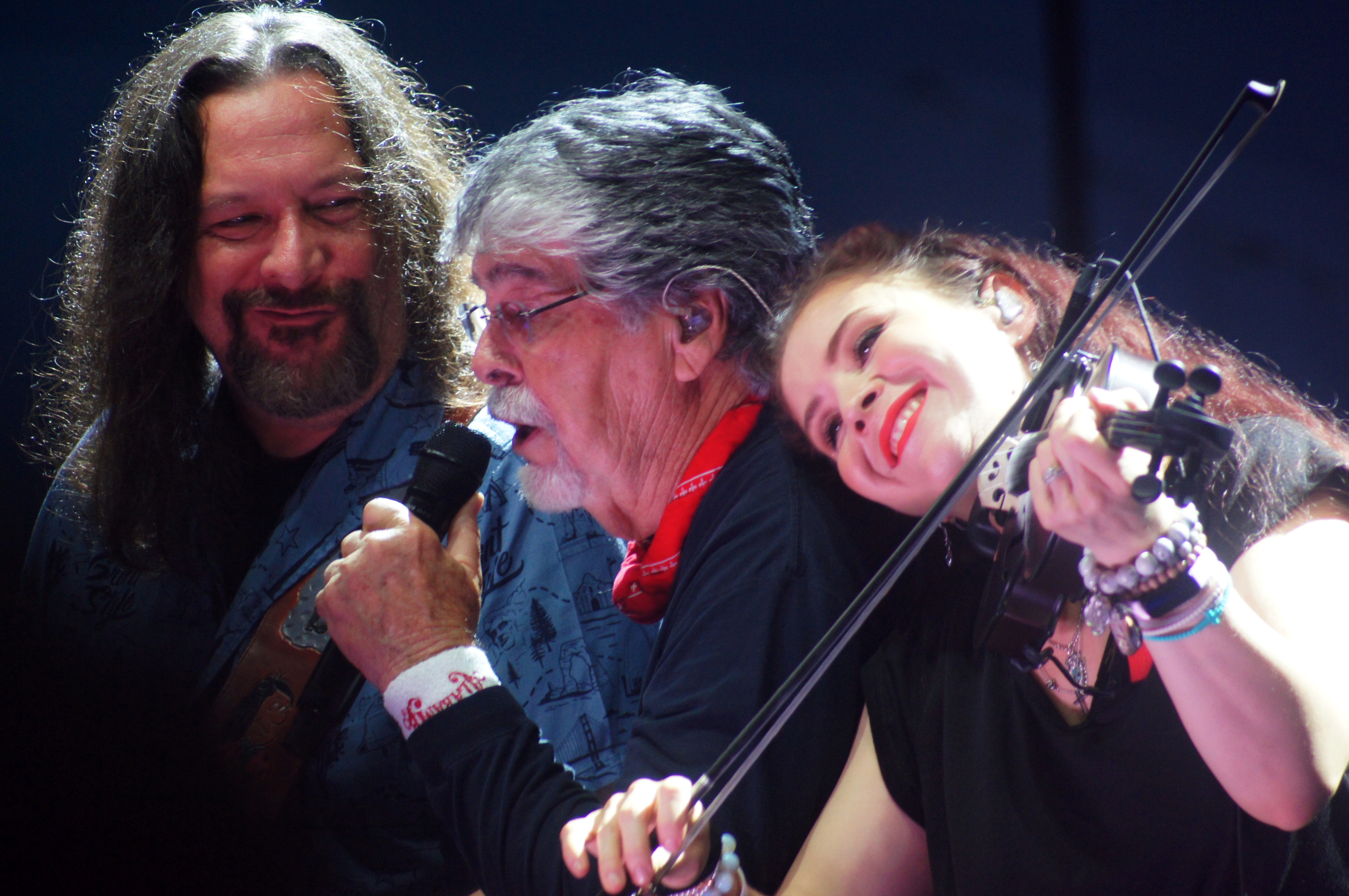
Alabama and David Lee Murphy wraps up the 2025 Old Washington Music Festival.
by Dave Parsons
Three days. Three weather events. One incredible country music festival.
There was never any doubt who’d kick off the Saturday lineup of the 2025 Old Washington Music Festival. And, no one deserved it more than Jake Binegar. The nearby native took the stage at 12:30 p.m. under overcast skies but with a crowd already showing up in boots and lawn chairs. The only downside of being on that early is that a good portion of the audience is still somewhat hungover from Friday night’s Big & Rich marathon. The young singer-songwriter handled the challenge with the easy confidence of someone who’s spent years playing honky-tonks and dive bars where hostile crowds are just part of the job description.
With a rich baritone and a set that included songs from his 2024 debut EP and a few covers that leaned into classic country territory, Binegar reminded everyone why the festival stays loyal to its local roots. There were plenty of folks wearing his merch even before the show, and he did sign autographs for a good while after his set. Binegar may be the opening act for now. But the way that field responded? He’s climbing.
By 2 PM, the fairgrounds were filling with the day’s core audience: families with coolers, groups of friends claiming territory with elaborate chair setups, and the festival veterans who knew Saturday would be the best day yet. Sam L. Smith, a Nashville regular making his festival debut, delivered exactly what this crowd needed. He brought tight country rock with enough traditional elements to satisfy the purists and enough modern edge to keep the younger fans engaged.
Smith’s band was one of the weekend’s tightest musical units, with a rhythm section that locked in from the first note and never wavered. Their take on classic country felt fresh rather than derivative, thanks largely to Smith’s genuine enthusiasm and the band’s musical chemistry.
Sam was on Season 21 of American Idol and has opened for national acts like The Oak Ridge Boys, Craig Morgan, and Ricky Skaggs. From the first note, Smith commanded the stage with a voice older than his years. His influences are the holy trinity of classic country: Keith Whitley, Randy Travis, and Vince Gill. But his delivery? He is clean, humble, with the kind of emotional clarity that makes even the back-row festival folks lean forward. He’s one hit single away from nationwide radio play and a major tour.
At 3:30 p.m., A Thousand Horses brought a different energy entirely. Southern rock with country flourishes, delivered with the swagger of a band that’s spent years perfecting their live show. The South Carolina quartet has always occupied an interesting space between country and rock radio, and the festival setting proved perfect for their hybrid approach.
Lead singer Michael Hobby’s voice carries the kind of whiskey-soaked authority that can’t be manufactured, while the band’s instrumental interplay shows influences ranging from Lynyrd Skynyrd to Keith Whitley.
The extended set flew by, leaving the crowd energized and ready for the evening’s bigger names. Sometimes the mark of a great festival act isn’t just individual songs but the ability to shift the entire day’s momentum, and A Thousand Horses accomplished exactly that. This was the set that took the energy up a gear.
At 5:00 p.m., on the dot, Michael Ray walked out with a swagger that belies his Florida roots and a catalog that’s slowly become a soundtrack for modern country heartbreak. Since breaking out in 2015 with Kiss You in the Morning,” Ray has carved a lane that blends smooth-voiced accessibility with dive-bar lyrical punch.
His Saturday set at Old Washington was a lesson in how to walk the line between slick and sincere. He opened with Kiss You in the Morning, rolled into Holy Water and Get to You, and brought the field to its feet with a rowdy, fist-pumping version of Joe Diffie’s Pickup Man. The crowd, especially the ladies along the pit rail, roared in approval.
But it was Her World or Mine that brought the temperature down, and the emotion up. Ray’s voice cracked in all the right places, and you could feel the quiet spread like wildfire. It was one of those festival moments where even the wind seemed to stop.
He closed with Whiskey and Rain, which was a real omen for the rest of the evening.
When David Lee Murphy took the stage, the crowd had reached its peak, as the festival was headed for the finish line. The veteran performer, best known for his ’90s hits and recent collaborations with Kenny Chesney, delivered what amounted to a master class in traditional country performance.
Murphy’s voice has aged like fine bourbon. Deeper and more resonant than in his radio heyday, with an emotional weight that comes from decades of living the stories he sings. His opening number, Out with a Bang, immediately established the audience’s collective memories and was followed by Loco, which had the entire crowd singing along to a chorus that’s been embedded in country music DNA for three decades.
Murphy has had a hand in co-writing many modern country hits, which took up the bulk of his show. His collaborations with Kenny Chesney got the biggest response, but it was Murphy’s solo material that revealed why he’s remained relevant across multiple decades of country music evolution. The set felt like both a career retrospective and a reminder that great songs transcend their original radio success.
As the band slid into the chorus of Dust on the Bottle, the crowd sang louder than the PA. You could see it on his face; the field had taken over. He didn’t need the mic anymore. It is fair to note that the crowd demanded an encore, which Murphy obliged. He was the only non-closing act of the weekend to get the honor.
When Alabama took the stage at 8:50 p.m., the evening sky had been dark and ominous for over an hour. A slight drizzle fell on the faithful who were not ready for the weekend to end without seeing Alabama. And Randy Owen, Teddy Gentry, and their bandmates weren’t about to let a little atmospheric drama interfere with their first appearance at Old Washington Music Festival.
The opening song, the first hit they ever had, Tennessee River, immediately established why Alabama remains country music royalty. Owen’s voice, now weathered by five decades of touring, still carries the emotional authority that made the band’s original recordings so compelling. The harmony vocals that defined their sound remain delicious, while the musicianship demonstrated why they’ve influenced generations of country artists.
Their catalog reads like a country music history lesson, and this performance touched all the expected milestones. Each song’s arrival was met with pure joy as fans recognized opening chords that had been soundtracks to their lives for decades.
But it was their final act that transformed the evening from memorable to legendary. As Alabama launched into their closing song, the first fat raindrops began falling. By the time they reached the chorus, it was a steady shower. They powered through their encore, Mountain Music while the rain intensified.
As fans streamed toward their cars and campsites, completely drenched but somehow energized by the experience, Saturday night provided the perfect conclusion to a weekend that had tested everyone’s commitment to outdoor music. Thursday’s cancellation, Friday’s delays, and Saturday’s meteorological finale created a story that no festival programmer could have planned.
The weather became the weekend’s unofficial headliner, creating shared experiences that bonded strangers and transformed potential disasters into legendary moments. Watching Alabama, country music royalty, refuse to yield to a rainstorm while their fans refused to seek shelter was pure Americana theater.
Old Washington Music Fest proved that in an era of climate-controlled venues and predictable corporate entertainment, there’s still magic in the unpredictable field of live music, outdoor stages, and audiences willing to commit to the experience regardless of circumstances.
Some concerts you remember for the songs. Others you remember for the experience. Old Washington Music Fest 2025 delivered both, with Mother Nature providing the encore that no one requested but everyone will remember forever. In a world of increasingly sanitized entertainment experiences, sometimes getting completely soaked while singing along to country music legends is exactly the weekend that we didn’t know we needed.



Editorials
The Rodeo Queen’s Nashville Dream: KC Johns and the Grit Behind the Glitter

Editorials
One of the Last Outlaws, Travis Tritt, Stirs the Soul at the Meadows

Editorials
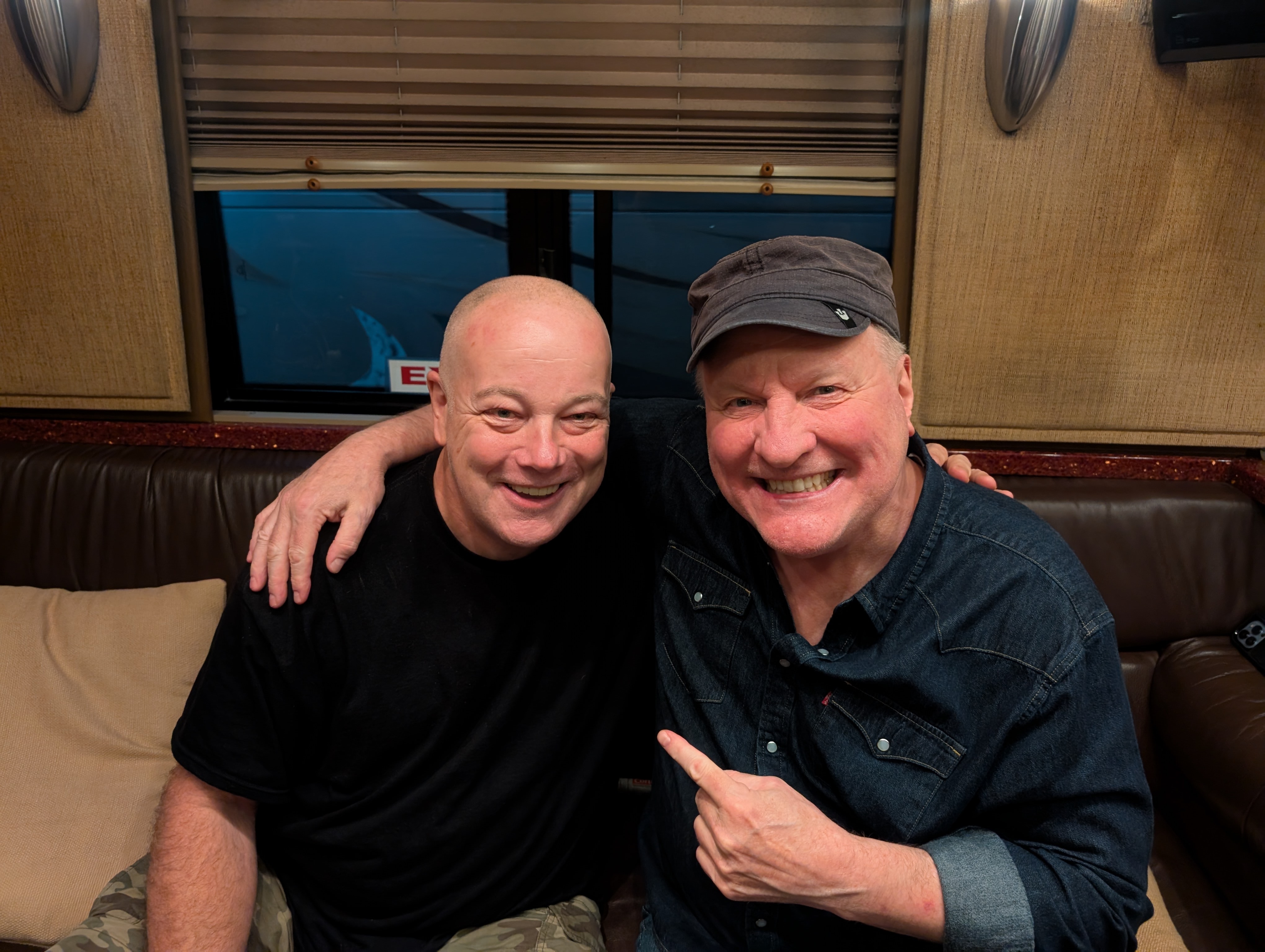
Faith, Fame, and the Long Road Home: Collin Raye’s Journey Through Country Music’s Heart and Soul
Editorials
David Lee Murphy Delivers Career-Spanning Show at Old Washington Music Festival

by Dave Parsons
There’s something about David Lee Murphy. There always has been. The summer sun was beginning its descent over the rolling hills of the Guernsey County Fairground at the Old Washington Music Festival on Saturday, July 19, 2025, when Murphy, whose career spans more than three decades, delivered a powerhouse performance that reminded everyone why his songs have remained staples of country radio for so long.
No elaborate production. No over-rehearsed banter. Just song after song that hit like tailgate memories and jukebox time machines. From Kenny Chesney and Jason Aldean covers to his own hits and back again, David Lee Murphy turned that Saturday slot into a masterclass in country music comfort food.
David Lee Murphy was born in Herrin, Illinois, a southern Illinois town steeped in coal country roots and the kind of grit that shows up in both voice and attitude, in 1959. He moved to Nashville in the early 1980s with a dream not unlike a thousand others. But he had something more: a poet’s touch, a honky-tonk heart, and a guitar case full of tunes that would one day shape the sound of country radio.
His first big break came as a writer. He penned hits for other artists before ever stepping into the spotlight himself. But it was his 1994 debut album Out with a Bang that made his name stick. That record gave us Party Crowd and Dust on the Bottle. Both songs became instant classics. One was a Friday night anthem. The other, a slow-sippin sermon on love and memory. And both have aged like well-worn boots.
Unlike many of his ’90s contemporaries, Murphy never chased trends. He never pivoted to pop-country. He never tried to reinvent himself with a cowboy hat and auto-tune. He just wrote and sang. As the 2000s rolled in, Murphy stepped out of the spotlight and leaned into the craft—writing hits for others. And what a list it became.
From the moment Murphy opened with Out With a Bang, it was clear that the 66-year-old performer had lost none of his stage presence or vocal power. The crowd, a mix of longtime fans who remembered his ’90s heyday and younger listeners discovering his catalog through streaming services, responded with immediate enthusiasm.
You could feel the energy shift the moment he stepped on stage, said Jennifer Walsh, a 42-year-old fan from Columbus who attended the festival with her teenage daughter. My daughter knew some of his songs from Spotify, but seeing him live was something else entirely. He commands that stage like someone half his age.
The setlist Murphy delivered was a masterful blend of his biggest hits and carefully chosen covers that showcased both his versatility as a performer and his deep knowledge of country music’s contemporary landscape. After the opening, he immediately shifted into Loco, one of his most beloved uptempo songs that had the crowd singing along from the first chorus.
What set Murphy’s Old Washington performance apart was his thoughtful integration of cover songs throughout the setlist. Rather than simply performing his hits and calling it a night, Murphy demonstrated his deep appreciation for contemporary country music by including carefully chosen covers that complemented his original material.
His rendition of Big Green Tractor, the Jason Aldean hit, showed Murphy’s ability to adapt to the more rock-influenced sound that has come to dominate country radio. Similarly, his covers of Justin Moore’s Why We Drink and Kenny Chesney’s Pirate Flag demonstrated Murphy’s understanding of country music’s evolution while staying true to his own artistic identity. These weren’t note-for-note recreations but probably more like Murphy helped create them.
The parade of hit songs from Murphy’s pen, an aspect of his career that has kept him active in Nashville long after his radio heyday, continued for most of the set. He co-wrote the songs Living in Fast Forward, Pirate Flag, and Everything’s Gonna Be All Right for Kenny Chesney. He even added his co-penned Hurricane, which Parker McCollum was responsible for being added to a lot of country streaming platforms. Bottom line is, David Lee Murphy knows how to write hit country songs.
The audience’s response to Murphy’s performance highlighted country music’s unique ability to bridge generational gaps. Older fans who remembered Murphy’s radio dominance in the 1990s sang along to every word of his classics, while younger attendees discovered the power of his songwriting in real time.
The covers Murphy included served as bridges between different eras of country music, allowing fans of various ages to find common ground. That was when he brought them all together in one big party crowd.
If ever a song fit a festival, it’s Party Crowd. The band kicked in, and the crowd down front moved forward. No one was left in lawn chairs. People danced like it was 1995 again. Murphy roared through the verses, let the crowd take the chorus, and stood back as the field echoed the final line together.
This is his most requested…. His most quoted…. His best-loved song….. Well, that is until the slow roll of the opening notes of the next song. The entire historical biography of one Creole Williams will bring a country festival crowd to their peak energy.
Creole Williams lived down a dirt road…..
The band pulled it down to a hush, and Murphy sang that opening verse nearly a cappella.
Don’t let it fool ya about what’s inside…
As the chorus rose, the sky began to darken with something more than night. The rain was coming…and no one cared. This was the moment they came for. For 3 minutes, everyone gave the person next to them their rendition of Dust on the Bottle, turning the Guernsey County Fairgrounds into the largest communal karaoke bar in Ohio. Murphy tipped his cap, said his thank you’s, and darted into the wings.
And the crowd just got louder, and more frenzied, and for the first time all weekend, they called an entertainer back out on stage. Murphy returned for an encore that caught everyone off guard. Instead of another country classic, he launched into Chuck Berry’s Johnny B. Goode, a choice that initially surprised but ultimately delighted the crowd.
The song selection wasn’t entirely random. The song has been a mainstay in setlists for decades, but it was the perfect upbeat way to wrap up a set of solid country music, with some good classic rock and roll. The performance of Johnny B. Goode provided a high-energy conclusion to Murphy’s set and left the crowd on an energetic high note, leading into Alabama.
For the thousands who attended the Old Washington Music Festival on July 19, 2025, this performance will likely remain a highlight of the festival. David Lee Murphy didn’t come to Old Washington to prove anything; he came to remind the fans what real country music sounds like.
And on a Saturday night, under a sky holding back a storm, David Lee Murphy did what he’s always done best.
He sang like the bottle wasn’t dusty at all.
It just needed another pour.
David Lee Murphy Setlist
Old Washington Music Festival – Saturday, July 19, 2025
- Out With a Bang
- Loco
- Big Green Tractor
- The More I Drink (Blake Shelton cover)
- Way Out Here
- Why We Drink (Justin Moore cover)
- Here and Now (Kenny Chesney cover)
- Are You Gonna Kiss Me or Not (Thompson Square cover)
- Hurricane (Parker McCollum cover)
- Anywhere With You (Jake Owen cover)
- Everything’s Gonna Be Alright
- Pirate Flag (Kenny Chesney cover)
- The Only Way I Know (Jason Aldean cover)
- Party Crowd
- Dust On The Bottle
Encore: 16. Johnny B. Goode (Chuck Berry cover)
Editorials
Full Circle: Alabama at the Old Washington Music Festival

by Dave Parsons
It had been 45 years…….45 summers under Ohio skies…..It was Saturday, July 19, 1980. I was 15 years old and had begged my dad to take me to Jamboree in the Hills. It was the festival’s 4th year, and they were already packing 80,000 a day into the natural amphitheater at Alderman Airport outside St. Clairsville, Ohio. In all honesty, I went to see 2 performers, and we prepared to leave after the second finished his set around 8 PM.
Two legendary country artists had been scheduled next in the primetime slots. One of them canceled a few weeks before the show, and was replaced with a group that had only one song with any radio airplay. The legendary story now is that they played the show for $500, which was mostly travel money to get there and to the next show. They opened with the Star-Spangled Banner, which garnered them a standing ovation of sorts out of the gate, as well as got everyone’s attention. What followed was a band playing with their hearts and gratitude for an audience this size. Their name was easy to remember: Alabama.
It’s been 45 years, and on Saturday night, July 19th, 2025, Randy Owen stepped to the microphone at the Old Washington Music Festival, just thirty miles down Interstate 70 from Alderman airport, at almost the same time of evening. There were many in the crowd who had been there that night in 1980, and even more folks who had come for this weekend, just to relive many evenings spent with Alabama’s music.
Forty-five years ago, those young cousins from Fort Payne, Alabama, took the stage at Jamboree in the Hills, with dreams bigger than their bank accounts and played the one song they had on the radio to that point…..Tennessee River. On this night in 2025, all those gold records, industry awards, and miles traveled opened their show at the Old Washington Music Festival with the same song….their first #1 in their career, Tennessee River!
The owner and dreamer for the Old Washington Music Festival made pilgrimages to Jamboree in the Hills, dreaming of recreating that magic, that sense of community, that feeling of coming home through music. And here, in this moment, with Alabama taking the stage once more on this sacred stretch of Ohio countryside, the circle was preparing to close in the most beautiful way imaginable.
The Alabama that took the stage Saturday night is notably different from the quartet that dominated country radio in their heyday. Jeff Cook’s death from complications of Parkinson’s disease on November 7, 2022, left Randy Owen and Teddy Gentry as the two remaining original members. Yet rather than diminishing the band’s impact, this transition has seemed to sharpen their focus and deepen their appreciation for the music they’ve created together.
Randy Owen, now 75, remains the band’s charismatic frontman, his distinctive vocals still carrying the emotional weight that made Alabama household names. His cousin Teddy Gentry, 72, continues to anchor the rhythm section with his bass playing and harmony vocals that have been integral to Alabama’s sound since their formation. Together, they’ve adapted to continue the Alabama legacy while honoring the memory of their fallen bandmate.
The current touring lineup includes professional musicians who round out the sound, ensuring that the full arrangements that made these songs classics are faithfully reproduced for live audiences.
It’s hard to imagine it took long years of tip jars and word of mouth to earn the major label deal they’d been dreaming about. It reads like the American dream: three cousins from Fort Payne, Alabama, who started playing music together in 1969, fundamentally altered the landscape of country music. They were among the first country acts to embrace the arena rock presentation style, with elaborate stage productions and high-energy performances. They proved that country music could fill stadiums and amphitheaters, paving the way for countless acts that followed.
They understood early on that longevity in the music business required not just talent but smart business sense, an authentic connection with their audience, and making friends with everyone who wanted to tell their story. How else does a 17-year-old kid, working at his high school 50-watt radio station, get invited to their press conference during their 8,000-10,000 seat arena tour, and then invited back the following year, when they were selling out 20,000-seat arenas?
Alabama’s 18-song setlist for the Old Washington Music Festival was a masterclass. They balanced their biggest hits with a few album cuts, showcasing the full range of their career. Following Tennessee River with If You’re Gonna Play in Texas (You Gotta Have a Fiddle in the Band) demonstrated the band’s playful side and their ability to craft every song into a sing-along.
The inclusion of songs like The Closer You Get and Sad Lookin’ Moon in the early portion of the set showed Alabama’s range beyond their party anthems. These songs allowed Randy Owen’s vocals to shine, and Teddy Gentry’s harmony to work to create the lush vocal arrangements that have always been an Alabama trademark. Forever’s as Far as I’ll Go and When We Make Love represented Alabama’s romantic side, songs that have been played at countless weddings and anniversaries over the decades.
Alabama’s performance at the Old Washington Music Festival served as more than entertainment. It was a reminder of the band’s profound impact on American pop culture and country music specifically, as well as their unwavering commitment to giving back to communities and fans across the nation.
Randy Owen created Country Cares for St. Jude Kids in 1989. His vision became a series of radiothons and fundraising efforts that raised more than $800 million to help St. Jude treat children with pediatric cancer and other life-threatening illnesses, as well as to research cures. It has become one of the most successful charitable partnerships in entertainment history.
The band’s commitment to their hometown goes far beyond a check as they hosted the June Jam festival in Fort Payne. June Jam was created by Alabama and brought some of the biggest names in country music together for sixteen years. The June Jam Foundation has raised over $20 million for disaster relief efforts, veterans, and a number of other charitable initiatives.
They also deliver one-on-one. A photographer friend of mine named Dale frequently brought a disabled young lady with him to see her favorite band. She was confined to a wheelchair and had difficulty speaking. Dale brought her to the Alabama show in Wheeling, WV, and asked me to meet them at the hotel in the afternoon. After Jeff Cook walked past and said hello to them both, Randy came through the lobby, jogging, headed for his room.
Randy stopped on a dime when he saw Dale and his friend. He knelt at the side of the wheelchair and took her hand. Dale explained she had worked on something Randy had encouraged, and she proceeded to stammer out I love you, Randy. Owen said he loved her too and hugged her. He was wiping his eyes as he stood up to shake our hands and head for the elevator. This was when Alabama had reached the top of the country music world. Randy could have waved and kept going. But he didn’t. That young lady had worked weeks on learning how to express that to him, and he received it with the love she offered. He made sure she got his wristbands at the show that night.
I thought of Dale and that young lady, as Randy introduced Angels Among Us. I couldn’t help but think I was looking at one while he sang the song, and his wristbands caught my eye.
One of the evening’s highlights came with Orange Blossom Special, featuring Megan Mullins Owen on vocals and fiddle. The instrumental showcases during this number allowed each band member to demonstrate their individual skills while maintaining the cohesive Alabama sound.
The final portion of the setlist was pure gold for Alabama fans. Born Country, She and I, and 40 Hour Week represent some of their most socially conscious songs, while Roll On (Eighteen Wheeler) brought the energy to arena levels, with its driving rhythm and universal theme of hard-working Americans keeping the country moving. “Take Me Down” continued the momentum, building toward the evening’s climactic finish.
As the medley of Dixieland Delight gave way to that sacred hymn Will the Circle Be Unbroken, something profound was happening in that Ohio field, and something profound was happening in the skies above. Those boys with a dream were completing a journey with a lot of the same people that began forty-five years ago, just thirty miles down this same stretch of Interstate 70, and as if on cue, the gentle drizzle that had blessed the evening suddenly gave way to the rain that had been forecasted all night. The young voices that once sang of Tennessee rivers had become seasoned storytellers, their harmonies deepened by time, loss, and the weight of carrying a musical legacy.
When Randy Owen’s voice wrapped around those timeless words about circles remaining unbroken, when Teddy Gentry’s bass notes provided the foundation as they had for nearly five decades, when the crowd joined in with voices spanning generations—grandparents who were at Jamboree in the Hills in 1980, parents who had raised their children on Alabama’s music, young adults discovering these songs for the first time—the very air seemed to shimmer with the magic of musical time travel as the rain began to fall in earnest, as if the sky itself was moved to tears by the beauty of the moment.
From that first nervous performance at Jamboree in the Hills in 1980, to this triumphant return as elder statesmen, the journey had traced a perfect circle. The scared young men with calloused hands and empty pockets had become legends. And the music —oh, the music remained as pure and true as that first night when they sang about Tennessee rivers and dared to dream.
At this point, Alabama’s impact is measured not just in chart success but in legacy. There would be no Luke Bryan without Alabama. No Jason Aldean, or Zac Brown Band, or Morgan Wallen. Their harmonies and heart set the standard for country groups from Diamond Rio to Rascal Flatts and beyond.
Yet the most powerful legacy they’ve built isn’t one of hits. It’s one of trust. Alabama is one of the few acts in country music history that can walk onstage after 40 years and not just receive a hero’s welcome, but deliver a show that feels fresh, urgent, and alive.
Which is exactly what they did on this Saturday night at the Old Washington Music Festival.
As Alabama played an encore of Mountain Music, and thousands of folks danced in the mud with voices in celebration of melodies that had soundtracked their last forty-five years of American summers, it was clear as the rain falling that some circles are meant to be unbroken. And sometimes, if we’re very lucky, we get to witness the moment when time folds back on itself and magic becomes real.
As they continue to Roll on to the next tour date, and complete another circle of decades in that town, for this one night, Alabama had come full circle on Interstate 70, from hopeful beginnings to legendary endings, proving that the greatest stories aren’t just about where you’re going, but knowing when you’ve arrived exactly where you were always meant to be.
The boys from Fort Payne had made it home again, thirty miles and forty-five years later, and the circle remains unbroken.
Editorials
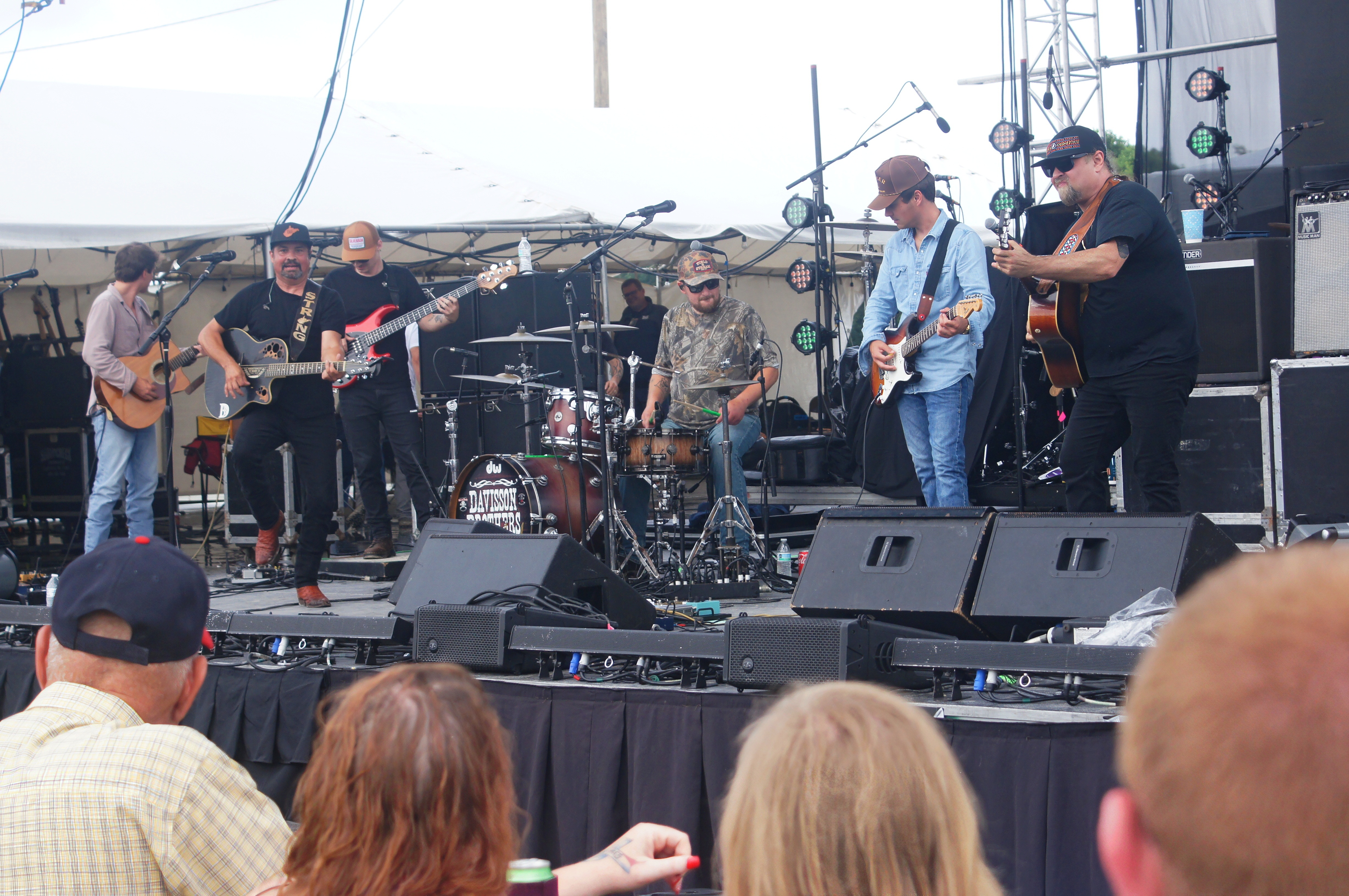
The Davisson Brothers Band Carry the Torch of Appalachian Heritage
by Dave Parsons
Rain had shortened the first half of the day at the Old Washington Music Festival on Friday, July 18. 2025. I had tried to arrange an interview with the Davisson Brothers band by email for a couple of weeks, and got no reply. A novel idea to be sure, came to me while they were signing autographs in the merch tent after their set. I could just get to the end of the line and ask them to do the interview after they have finished signing.
43 years ago, when I started this writing/photography adventure, this was the way it was done. Find a road manager or group leader, and ask for what you want from them. Nowadays, your email goes to the publicist, who goes to management, who loops you into members of the road team that never get back to you. (Yes, it happened twice during this festival weekend!)
Or you just never get a reply for your efforts.
So, I approached the Davisson Brothers Band with hat in hand and asked for a few minutes of their time, and they graciously said yes. They took me around the side of the merch tent, which was great for shielding noise to record the affair on my phone, but we continued walking to their bus, past the bunks, and to the lounge area in the back.
Donnie Davisson and I settled into chatting, with subjects ranging from Charlie Daniels to Terry Bradshaw, until brother Chris Davisson was able to join us, and we got down to answering every imposing question on their career I could think to ask. What made it special was that it was like talking to someone in your family, and considering they are family, it made it all the more special to be there.
The story of the Davisson Brothers Band isn’t just about three siblings who picked up instruments and found success—it’s about a musical lineage that stretches back through the hollers and ridges of West Virginia like the roots of an ancient oak. Blending bluegrass, Southern rock, and country into a refreshing and often progressive acoustic sound, the Davisson Brothers Band draws from their Appalachian heritage and a wide array of musical influences, including Garth Brooks, Willie Nelson, Del McCoury, and Dickey Betts.
We’re sixth-generation musicians. Seven generations, Chris told me as we settled into the chat. We come from Old Mountain Fiddlers. And I like the thing that we just keep growing and learning. We’re still learning every day and trying to teach these young next generation.
This isn’t mere mountain folklore, but it’s a living, breathing tradition that continues to evolve on stages from West Virginia honky-tonks to Australian music festivals. The band has built its reputation not just on its musical prowess, but on its commitment to carrying forward something that runs deeper than entertainment: cultural preservation through artistic expression.
The journey from playing the bars in Morgan County to touring internationally speaks to both the band’s talent and their relentless work ethic. It’s a path that’s taken them from the smallest venues in their home state to sharing stages with some of country music’s biggest names, yet they’ve never forgotten where they came from.
We have got to do it in arenas for 15 or 20,000 people. We toured all last year at 10 to 15,000-seat venues, and we come home. And the next weekend we get right back and do something in the place that we used to play,” Chris reflects, his voice carrying both pride and humility.
The band’s international success, particularly in Australia, illustrates how authentic Appalachian music transcends geographic boundaries. Their song Po Boys became a number one hit down under, leading to appearances at major festivals and even a reality television show on Australian CMT.
When that song went to number one over there, we went and did what they have, what they call the CMC Music Fest. It was like Jamboree in the Hills back in the day. And then we had a reality television show on their CMT over there.”
Perhaps most remarkable about the Davisson Brothers Band is how they’ve managed to nurture the next generation of family musicians while maintaining their own artistic growth. The interview revealed a particularly touching aspect of their story: the emergence of sons Nick and nephew Landon as artists in their own right.
These boys here, Nicholas, Jared, and Lanham, have been on stage with us since they were three years old. Now Nick Davidson has his own career starting. And he’s about to put out some music. Then Lanham is about to put out some music. Lanham McFadden and Jared B. But these boys have been on stage with us since they were three years old.”
The pride in Chris’s voice was unmistakable as he described watching these young men, who literally grew up on stage, now stepping into their own as artists. Their performance of Chris Stapleton’s Tennessee Whiskey during the rain-shortened set demonstrated not just their vocal abilities but their understanding of how to honor both tradition and contemporary country music.
They also write all their own music, these two boys. But since this was a new audience for them, we did a cover song, which they killed it on.”
The band’s upcoming tour with Oliver Anthony represents perhaps their biggest mainstream breakthrough to date. Anthony’s meteoric rise with Rich Men North of Richmond has opened doors for authentic Appalachian artists like the Davisson Brothers, who’ve found themselves at the center of a cultural movement that values genuine mountain music over polished Nashville productions.
We’re currently on tour with Oliver Anthony, who is the biggest breakout artist of the last two years. He’s broken every traditional country chart with his spiral hit, Rich Men North of Richmond.
The connection goes deeper than just touring together. Chris was involved in the recording process for Anthony’s latest single “Scorn for Warming,” which went to number one on the charts. The collaboration represents a meeting of minds between established mountain musicians and the new wave of authentic country artists who are challenging Nashville’s commercial approach.
He went to an old farmhouse down in West Virginia and recorded it and made the video. It just went number one on all the charts. And the video was trending at number five.
The band’s recent appearance at Joe Rogan’s comedy club, The Mothership, in Austin, Texas, marked another milestone in their career. Being the first musical act to perform at the venue speaks to their crossover appeal and the cultural moment they’re helping to define.
We also just got to be the first ever act to play Joe Rogan’s Mothership in Austin, Texas. Three weeks ago, with Oliver Anthony. Joe Rogan invited us down, and Oliver did the podcast, and we filmed and recorded the first ever music in the comedy club, the mother ship.”
The significance wasn’t lost on them. In an era where authentic voices are increasingly valued over manufactured ones, the Davisson Brothers Band represents something that resonates beyond traditional country music audiences. Their appearance on one of the most influential platforms in American media demonstrates how far their mountain music has traveled.
Their latest album, Home Is Where the Heart Is, was produced by Brent Cobb and David “Ferg” Ferguson, and features Tim O’Brien, Rob McCoury, Stewart Duncan, Leftover Salmon’s Vince Herman, Ronnie Bowman, Kyle Tuttle, Lindsay Lou, and more. The record represents both an artistic peak and a personal statement about their identity as musicians.
That record was awesome. That was kind of a record for my brother and I. The family. It was like we weren’t trying to write for the radio. We weren’t trying to write hit songs on the radio. It was more just writing what was happening with us.”
The album process, recorded at the legendary Cowboy Jack Studio in Nashville, where Johnny Cash once laid down tracks, brought together musical heroes and friends in an atmosphere that prioritized authenticity over commercial considerations.
We recorded it at the original Cowboy Jack Studio in Nashville. We got to record it with Brent Cobb, produced it with David Ferguson on 30. And it was cool to have our buddies producing it too… We’ve got guys that were our heroes from the Del McCoury band and Leftover Salmon to guys like Tim O’Brien.
The creative process involved whittling down about 50 some songs to the final twelve tracks, a challenge that speaks to their prolific songwriting and the difficulty of capturing their full artistic vision in a single release.
Beyond their musical achievements, the Davisson Brothers Band serves as cultural ambassadors for a region that’s often misunderstood or stereotyped in popular media. Their success provides a platform for sharing the rich musical traditions of Appalachia while dispelling misconceptions about mountain culture.
We’re just a family group going up and down the road, doing what we know and representing West Virginia, Appalachia, and our family culture and heritage. And kind of waving that West Virginia flag everywhere we go.”
This representation goes beyond symbolism. Their music carries the stories, struggles, and triumphs of their community, offering audiences worldwide a genuine glimpse into Appalachian life. In an industry often criticized for its lack of authenticity, they provide something increasingly rare: music that emerges organically from lived experience rather than marketing calculations.
Perhaps what strikes me most about the Davisson Brothers Band is their understanding of music as both art and inheritance. They’re not just performing songs; they’re maintaining a cultural tradition that connects past, present, and future generations. The sight of multiple generations sharing the stage represents something increasingly rare in modern music: genuine intergenerational collaboration.
We just had a viral video with our dad… three generations of Davidson were singing and it went viral. And we just keep going up the ladder and doing what we love to do, and trying to build a future for the young boys and set an example.
Their approach to nurturing young talent within the family structure provides a model for how traditional music can evolve without losing its essential character. By bringing their children up on stage from an early age, they’ve created a learning environment that no music school could replicate.
As our conversation wound down and the band prepared to load their equipment for the next show, I reflected on how the weather-shortened performance had provided something more valuable than a full concert set: insight into the character and philosophy of artists who view setbacks as opportunities and who measure success not just in terms of career achievements, but in terms of family legacy and cultural preservation.
The Davisson Brothers Band represents something essential in American music: the continuation of authentic traditions by artists who understand that their role extends beyond entertainment to cultural stewardship. In an era of manufactured personas and algorithm-driven playlists, they offer something increasingly precious: music that emerges from real places, real people, and real experiences.
Their story isn’t just about three brothers from West Virginia who made it in the music business. It’s about the power of family, the importance of cultural heritage, and the way that authentic artistry can transcend geographic and social boundaries to connect with audiences around the world.
As they prepared to continue their tour with Oliver Anthony and plan for future projects including the young family members’ solo careers, one thing was clear: the Davisson Brothers Band isn’t just preserving Appalachian musical traditions—they’re actively writing the next chapter of that story, ensuring that the mountain music legacy continues to evolve and inspire for generations to come.
The goal is to continue to carry on our family tradition… And I like the thing that we just keep growing and learning. We’re still learning every day and trying to teach these young next generation.
They’re not selling an image—they’re living an inheritance. They stand at the intersection of tradition and tomorrow, singing through storms, bringing crowds together like church congregations in the rain.
On this day at the Old Washington Music Festival, through torn-out songs, downed wires, damp amps, drenched feet, and last-minute interview requests, they delivered more than music. They offered a testimonial that music, forged in mountain mud and generations of a family, rises above storms.


Kittie announces summer ‘Legacy Of Fire : 30 Years Of Kittie’ headlining tour

Nine Inch Nails’ Trent Reznor states he isn’t sure if band will be touring anymore

Ed Sheeran Owns Marvel Stadium & Mesmerises 60,000 Fans

Avenged Sevenfolds Zachary Baker announces alt country solo album

Sleeping Giant returns for two night 20th anniversary reunion shows

When the Music Stopped: A Night at Country Calling Festival That Changed Everything

The Stray Cats announce fall 2025 headlining tour

Pig Pen (featuring Matty Matheson) announce debut album, sign to Flatspot Records

Breaking : San Diego plane crash casualties appear to be music industry related
